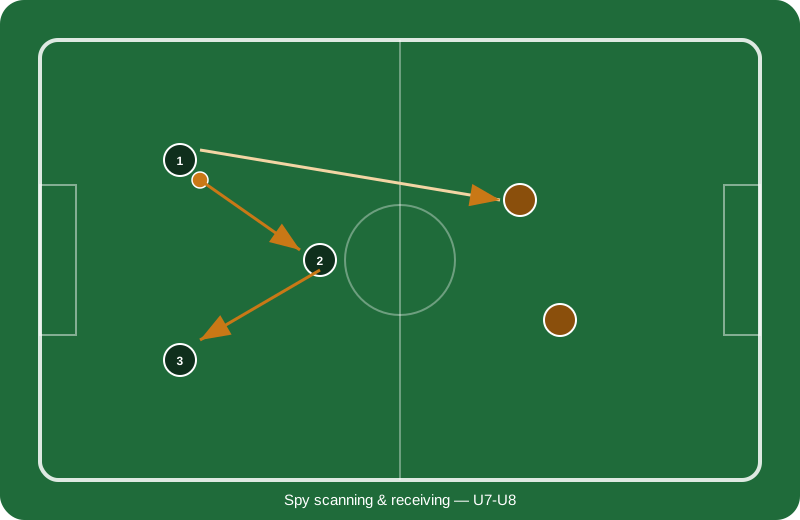
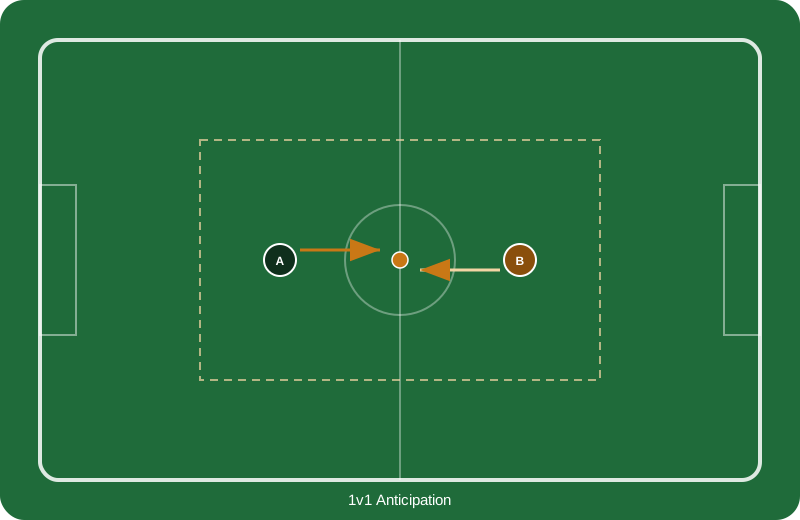
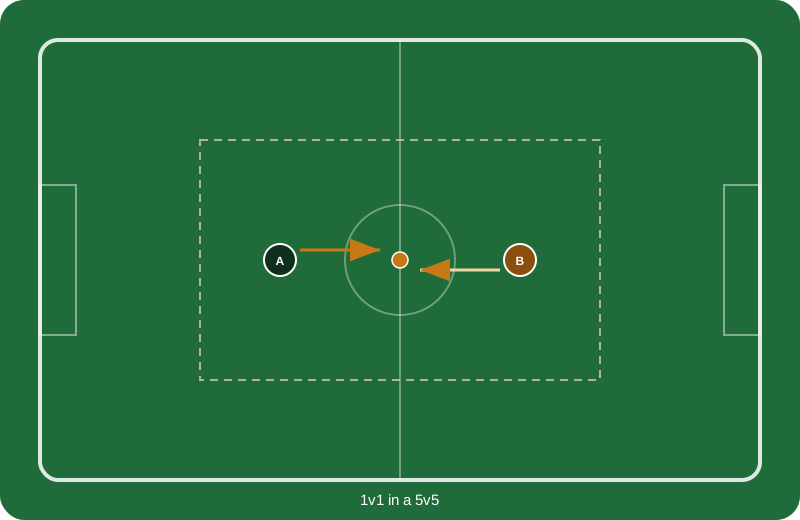
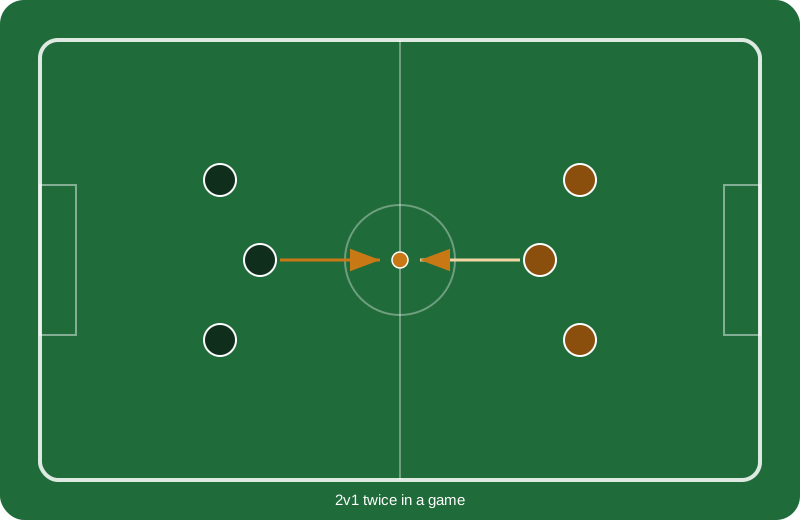
Copy the pitch picture as closely as numbers allow.
Protect ball-rolling time; intervene in natural stoppages.
Use STEP live if challenge or success tips too far.
Session flow
6m
13m
13m
13m
5m
Arrival · 6 mins
Spy passes (U7-U8)
6:00
Fun ball each activity linked to spy scanning & receiving. Lots of touches, short queues, coach joins in.
Organisation: Half of a 5v5 pitch; 1 ball each to start.
Coaching points
Big smiles, lots of praise.
Keep the ball close when moving.
Eyes up when you can.
Progressions
Add a soft challenge or tagger.
Regressions
Bigger space, slower demo.
Technical · 13 mins
Practice picture — Spy scanning & receiving
13:00
Simple game that repeats the picture of spy scanning & receiving with light opposition.
Organisation: Small grids or channels; rotate roles every 60–90 seconds.
Coaching points
Show me the picture with your body.
Try again quickly after a mistake.
Use both feet when you can.
Progressions
Add a mini-goal or end zone.
Regressions
Remove the defender / add a helper.
Skill · 13 mins
Drill 2 — develop Spy scanning & receiving
13:00
Add light opposition or a constraint so players must solve spy scanning & receiving under pressure. Rotate roles often.
Organisation: Multiple mini-pitches so everyone is playing.
Coaching points
Play forward when you see space.
Help a teammate who is stuck.
Celebrate effort, not only goals.
Progressions
Shrink space / add a live defender.
Regressions
Unopposed patterns first.
Small-sided game · 13 mins
Drill 3 — game for Spy scanning & receiving
13:00
Small-sided or conditioned game that scores/rewards spy scanning & receiving. Minimal stoppages.
Organisation: Multiple mini-pitches if needed so everyone plays.
Coaching points
Find moments for spy scanning & receiving.
Help a teammate who is stuck.
Celebrate effort, not only goals.
Progressions
Remove the condition when the theme is secure.
Regressions
Neutral helper / overload.
Plenary · 5 mins
What did we learn?
5:00
Players share one thing they tried. Coach links back to the theme in kid language.
Organisation: Circle with the ball.
Coaching points
Listen to teammates.
Name one success.
Related drills
With the ball
Ball movement/pass
With the ball
Warmup
Rules –
Half players have ball
Constant movement with the ball
Looking for a “line breaking pass” between 2 people to a spare person
Aims –
Passing/Receiving
Break Lines
Scanning
Communication
Setup -
Grid 20x30 (or 18yard box)
Length –
10 minutes
1 point
2 points
6v6/6v12 Rondo – Utilising the half turn
3 teams (taking turns – 7 mins each)
White team is collecting points
Yellow team defending
Blue team outside being available for passes
Rules –
Team collecting points loses a popint each time they lose possession
They get 1 point for a pass which goes from top to side or side to top, 2 points for a ball which switches long ways.
Collect as many points as they can in 7 minutes.
Coaching Points –
360 scanning
Bodyshape
Decision making
Always passing to back foot
Always receiving on back foot
1 point
2 points
6v6/6v12 Rondo – Utilising the half turn
3 teams (taking turns – 7 mins each)
White team is collecting points
Yellow team defending
Blue team outside being available for passes
Rules –
Team collecting points loses a popint each time they lose possession
They get 1 point for a pass which goes from top to side or side to top, 2 points for a ball which switches long ways.
Collect as many points as they can in 7 minutes.
Coaching Points –
360 scanning
Bodyshape
Decision making
Always passing to back foot
Always receiving on back foot
Passing Gates & Movement Relays (20 mins)
Setup:
Cones create 4–6 small “gates” (1m wide) in a grid (15x15m).
Players work in pairs, each pair with a ball.
How it works:
Pass the ball through a gate, then immediately both players sprint to another gate (can’t go to the same gate twice in a row).
Player receiving must time their movement to be in position for the next pass.
Challenge: Receiver must “check off” as the ball arrives, pass first time, and move again.
Coaching Points:
Encourage quick scanning for the next gate after passing.
Stress moving as soon as the pass is played—run, not walk – foot doesn’t touch floor after passing.
Quick body adjustment—be on your toes, always ready to move.
Communication: call for the ball, shout the next gate.
Progressions:
P1 – Pass must be received on a turn and not straight back out of the front.
P2 – first touch must take them out of the shape and into the direction they’re going
Pass/Move through gates - first touch/control